Best Bitcoin Wallets in 2026: Ranked and Reviewed

What actually makes a Bitcoin wallet «the best» for you
There’s no single best Bitcoin wallet — there’s a best wallet for what you’re trying to do with it. Someone holding a small amount for years has completely different needs than someone who spends Bitcoin weekly or trades it actively. Before the rankings below, it’s worth being honest about which category you actually fall into, because the «best» wallet for a stranger on YouTube might be the wrong one for you.
 You might also likeWhat Is Bitcoin? A Complete Beginner’s Guide
If you’re still deciding whether to keep coins on an exchange or move them to a personal wallet at all, our guide on how to buy Bitcoin covers that decision in more detail — and if terms like «private key» still feel unfamiliar, what Bitcoin actually is is worth reading first.
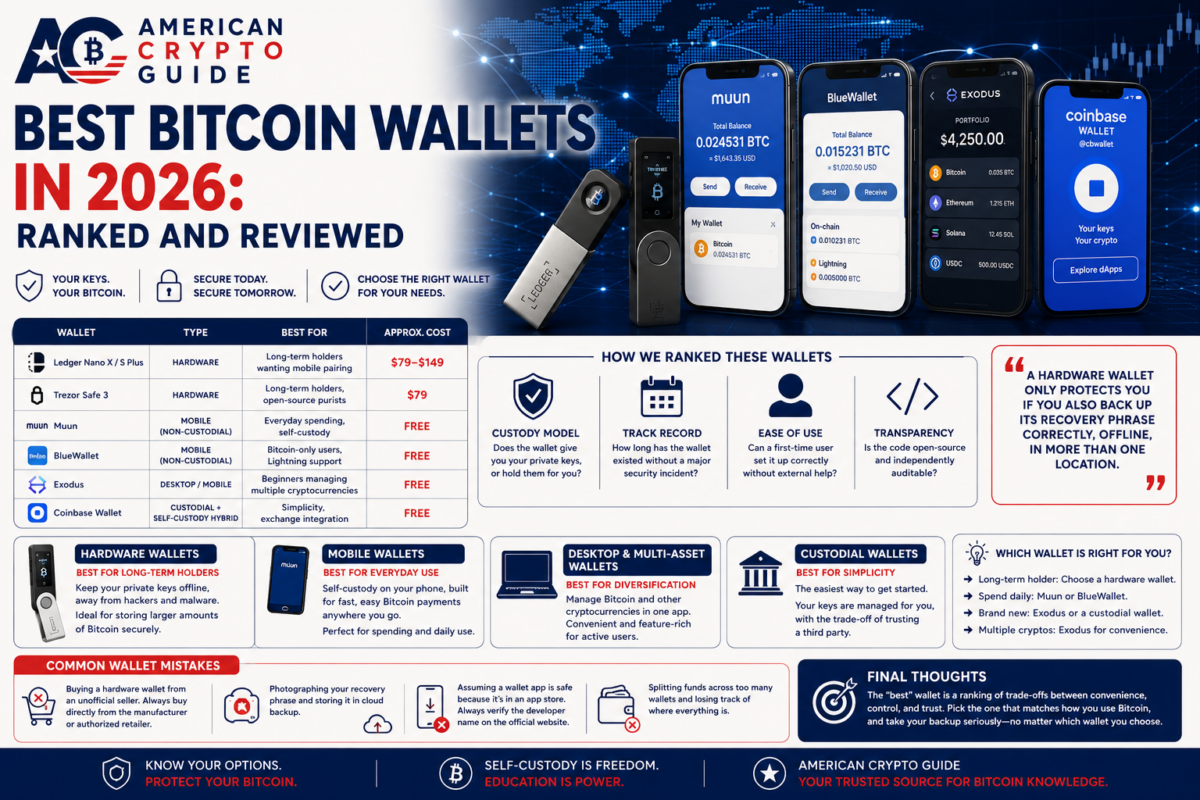
The quick-answer table
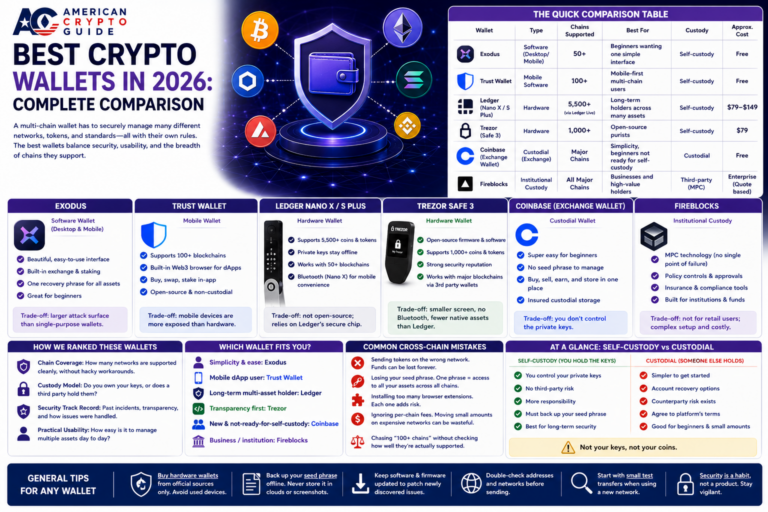
| Wallet | Type | Best for | Approx. cost |
|---|---|---|---|
| Ledger Nano X / S Plus | Hardware | Long-term holders wanting mobile pairing | $79–$149 |
| Trezor Safe 3 | Hardware | Long-term holders, open-source purists | $79 |
| Muun | Mobile (non-custodial) | Everyday spending, self-custody | Free |
| BlueWallet | Mobile (non-custodial) | Bitcoin-only users, Lightning support | Free |
| Exodus | Desktop/mobile | Beginners managing multiple cryptocurrencies | Free |
| Coinbase Wallet | Custodial + self-custody hybrid | Simplicity, exchange integration | Free |
Hardware wallets — best for long-term holders
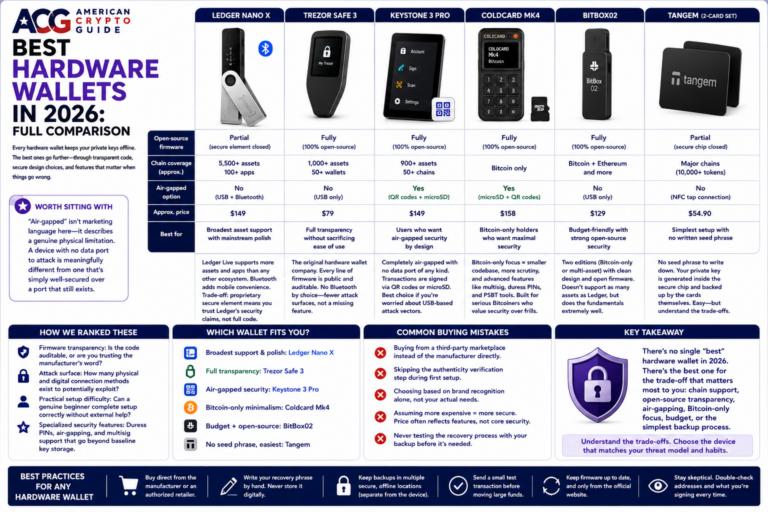
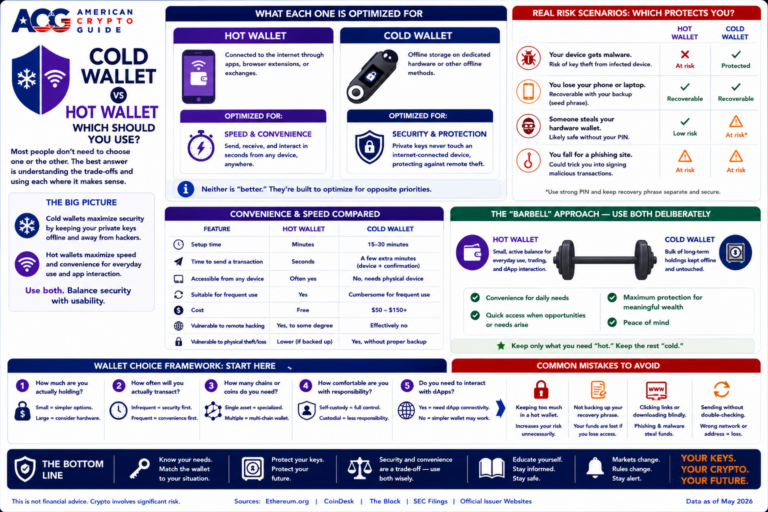
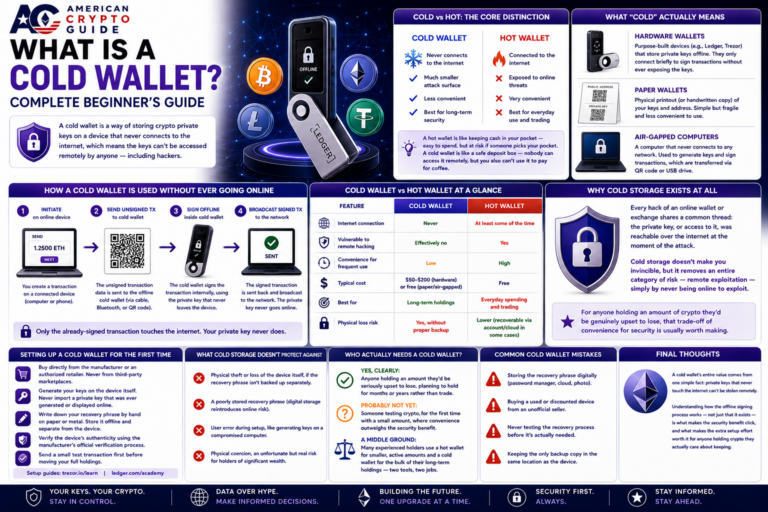
If you’re planning to hold Bitcoin for years rather than trade it, a hardware wallet is the option security-focused reviewers consistently recommend, because your private keys never touch an internet-connected device.
Ledger Nano X and Nano S Plus
Ledger’s devices pair with a companion app (Ledger Live) and support Bluetooth on the Nano X, making mobile use more convenient than most hardware wallets. The trade-off is trust: Ledger’s software and firmware are partially closed-source, which some security researchers consider a downside compared to fully open alternatives. Ledger’s own documentation and setup guides are available at https://www.ledger.com.
Trezor Safe 3 (and the original Trezor Model One)
Trezor was the first hardware wallet ever made, and its current lineup remains fully open-source — meaning independent researchers can audit exactly how it works, rather than trusting the manufacturer’s word for it. It lacks Bluetooth, which some see as a security advantage rather than a missing feature. Full specs are published at https://trezor.io.
A quick blockquote worth remembering: a hardware wallet only protects you if you also back up its recovery phrase correctly, offline, in more than one location. The device is half the security model — your backup habits are the other half.
Mobile wallets — best for everyday use
Hardware wallets aren’t practical for spending Bitcoin at a coffee shop. That’s what mobile, non-custodial wallets solve — you hold your own keys, but the whole experience lives on your phone.
Muun
Muun is a self-custody wallet built specifically to make Lightning Network payments (Bitcoin’s fast, low-fee payment layer) simple without requiring users to understand channel management. It has no separate on-chain and Lightning balances to juggle — the app handles that automatically.
📬Did you like this article?
Subscribe and receive our posts directly in your inbox. Free!
Sin spam. Puedes darte de baja cuando quieras.
BlueWallet
BlueWallet is open-source, Bitcoin-only (no other coins cluttering the interface), and supports both standard on-chain transactions and Lightning payments. It’s a favorite among Bitcoin-only communities specifically because it doesn’t try to be a multi-currency app.
Desktop and multi-asset wallets
Exodus
Exodus supports Bitcoin alongside dozens of other cryptocurrencies in one interface, with a built-in exchange feature for swapping between them. It’s non-custodial and beginner-friendly, though the convenience of an all-in-one app comes with a larger attack surface than a Bitcoin-only wallet.
Custodial wallets — the simplest option (with a real trade-off)
Coinbase Wallet
Not to be confused with a Coinbase exchange account, Coinbase Wallet is a separate self-custody app, though many beginners use custodial exchange balances the same way. Custodial options remove the responsibility of managing a private key entirely — at the cost of the core «not your keys, not your coins» principle. It’s a reasonable starting point for very small amounts while you learn, and a less reasonable long-term home for significant holdings.
How we ranked these
Four factors carried the most weight in this list:
- Custody model — does the wallet give you your private keys, or hold them for you?
- Track record — how long has the wallet existed without a major security incident?
- Ease of use — can a first-time user set it up correctly without external help?
- Transparency — is the code open-source and independently auditable?
No wallet scores perfectly on all four, which is exactly why the «best» one depends on which factors matter most to you.
Which wallet fits which type of person
- You’re holding a meaningful amount for years: a hardware wallet — Trezor if open-source matters most to you, Ledger if mobile convenience does.
- You spend Bitcoin regularly: Muun or BlueWallet, both non-custodial and built for real-world use.
- You’re brand new and holding a small test amount: Exodus or a custodial app, while you get comfortable with the basics.
- You already hold multiple cryptocurrencies: Exodus, for the single-interface convenience — accepting the slightly larger attack surface that comes with it.
Common wallet mistakes worth avoiding here
- Buying a hardware wallet from an unofficial third-party seller, where devices have occasionally been tampered with before sale. Buy directly from the manufacturer or an authorized retailer.
- Photographing your recovery phrase and storing it in cloud photo backup — defeating the entire point of offline storage.
- Assuming a mobile wallet app is safe because it’s in an official app store — always verify the developer name matches the wallet’s official website before downloading.
- Splitting funds across too many wallets to «diversify,» and then losing track of where everything is.
Final thoughts
The «best» Bitcoin wallet ranking on any given list — including this one — is really a ranking of trade-offs between convenience, control, and trust. What matters most is picking the option that actually matches how you plan to use Bitcoin, and taking the backup process seriously regardless of which wallet you choose.