What Is a Cold Wallet? Complete Beginner’s Guide

The one-line definition
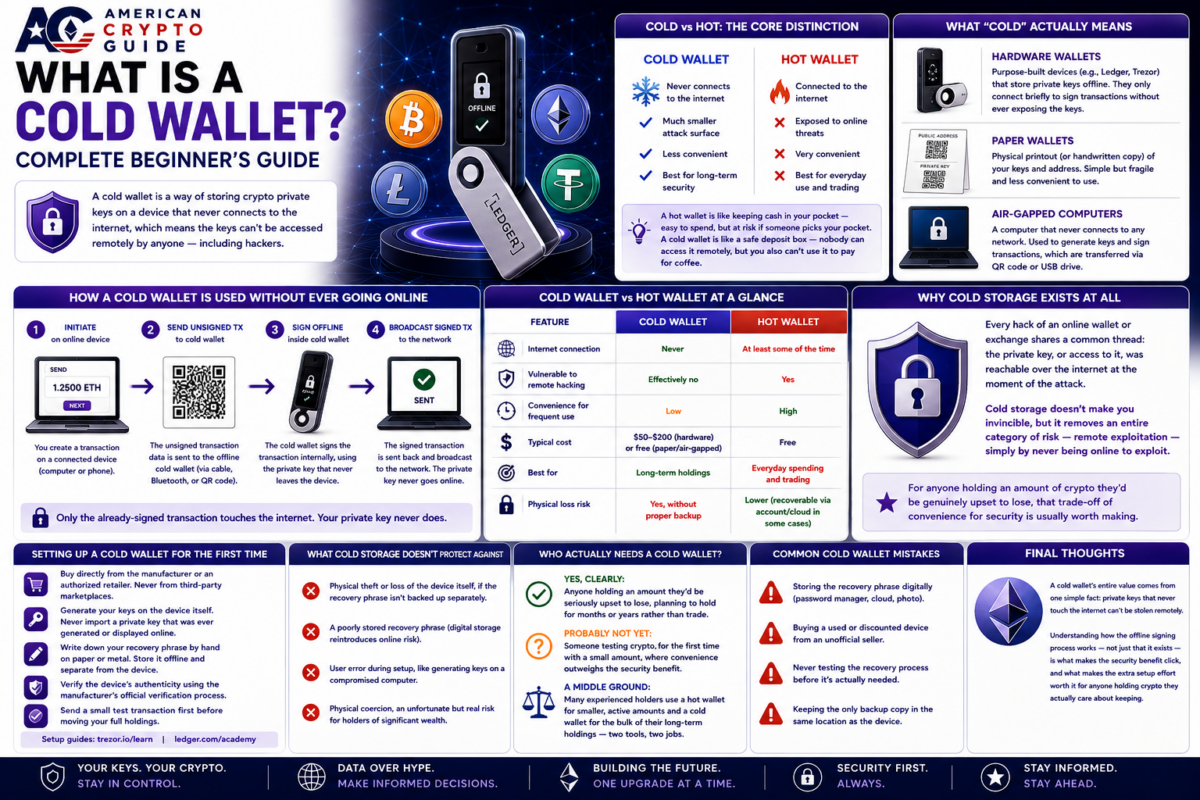
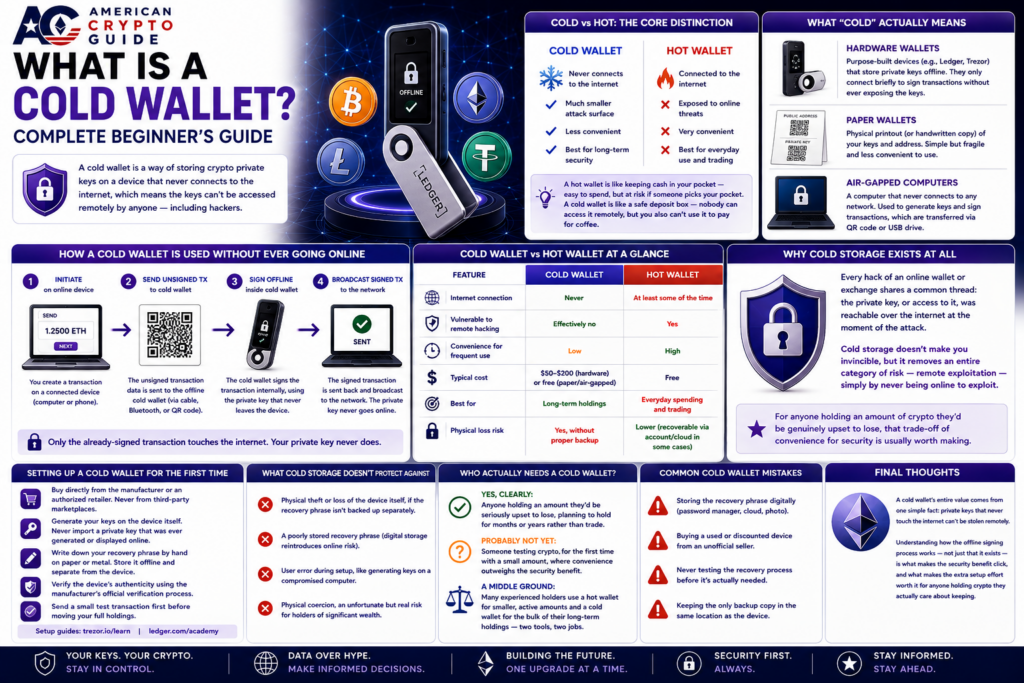
A cold wallet is a way of storing crypto private keys on a device that never connects to the internet, which means the keys can’t be accessed remotely by anyone — including hackers. That single property, being permanently offline, is the entire idea behind cold storage, and it’s why it’s considered the gold standard for securing meaningful crypto holdings.
Cold vs hot: the core distinction
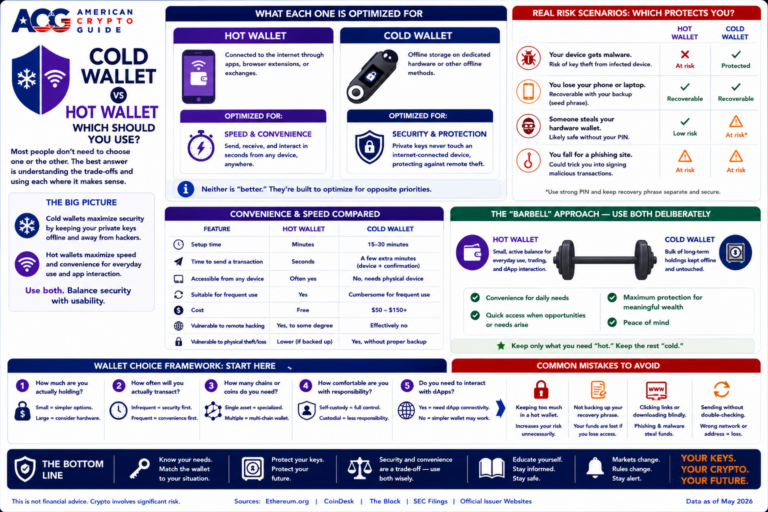
Every crypto wallet falls into one of two broad categories. A hot wallet is connected to the internet at least some of the time — a mobile app, a browser extension, an exchange account — which makes it convenient for regular use but exposes it to online threats like malware, phishing, and remote exploits. A cold wallet never touches the internet at all, trading that convenience for a dramatically smaller attack surface.
A useful mental image: a hot wallet is like keeping cash in your pocket — easy to spend, but at risk if someone picks your pocket. A cold wallet is like a safe deposit box — nobody can access it remotely, but you also can’t use it to pay for coffee.
What «cold» actually means in practice
Cold storage isn’t one specific product — it’s a category that includes a few genuinely different approaches.
Hardware wallets
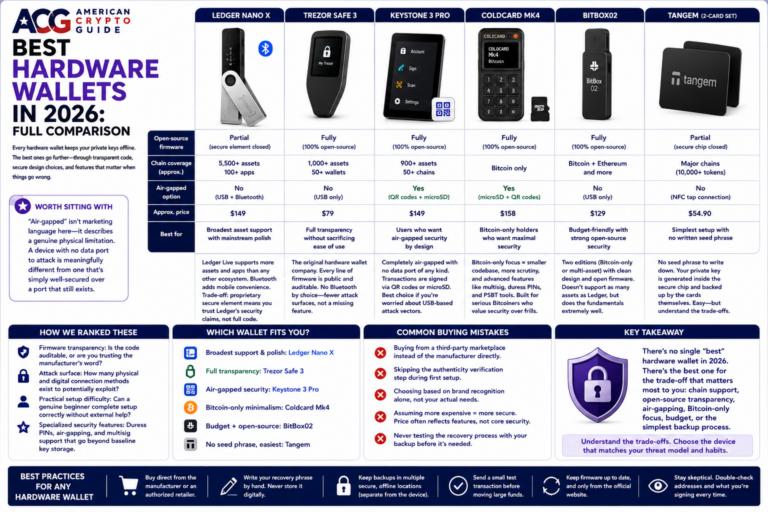
Purpose-built physical devices, like a Ledger or Trezor, designed specifically to generate and store private keys offline. They connect to a computer or phone only briefly, to sign a transaction, without ever exposing the private key itself to the connected device. This is the most common and most beginner-friendly form of cold storage today.
Paper wallets
A physical printout (or handwritten copy) of a private key and its corresponding public address, generated on an offline computer. Once popular, paper wallets have fallen out of favor because they’re fragile — vulnerable to fire, water damage, and fading — and don’t offer the transaction-signing convenience hardware wallets do.
Air-gapped computers
A computer that has never been, and never will be, connected to any network, used exclusively to generate keys and sign transactions, with signed transactions transferred to an online device via a method like a QR code or USB drive. This approach offers maximum control but requires meaningful technical skill to set up and maintain correctly.
📬Did you like this article?
Subscribe and receive our posts directly in your inbox. Free!
Sin spam. Puedes darte de baja cuando quieras.
How a cold wallet is used without ever going online
This is the part that confuses a lot of beginners: if a cold wallet never connects to the internet, how do you actually send crypto from it? The answer is that the wallet signs the transaction offline, and only the already-signed transaction — not the private key — ever touches an internet-connected device:
- You initiate a transaction on a connected device (a computer or phone).
- The unsigned transaction data is sent to the offline cold wallet, typically via a cable, Bluetooth, or QR code.
- The cold wallet signs the transaction internally, using the private key that never leaves the device.
- The signed transaction — which reveals nothing about the private key itself — is sent back to the connected device and broadcast to the network.
The private key itself never crosses that boundary. That’s the entire security model in a sentence.
Cold wallet vs hot wallet at a glance
| Cold wallet | Hot wallet | |
|---|---|---|
| Internet connection | Never | At least some of the time |
| Vulnerable to remote hacking | Effectively no | Yes |
| Convenience for frequent use | Low | High |
| Typical cost | $50–$200 (hardware) or free (paper/air-gapped) | Free |
| Best for | Long-term holdings | Everyday spending and trading |
| Physical loss risk | Yes, without proper backup | Lower (recoverable via account/cloud in some cases) |
Why cold storage exists at all
Every hack of an online wallet or exchange shares a common thread: the private key, or access to it, was reachable over the internet at the moment of the attack. Cold storage doesn’t make you invincible, but it removes an entire category of risk — remote exploitation — simply by never being online to exploit. For anyone holding an amount of crypto they’d be genuinely upset to lose, that trade-off of convenience for security is usually worth making.
Setting up a cold wallet for the first time
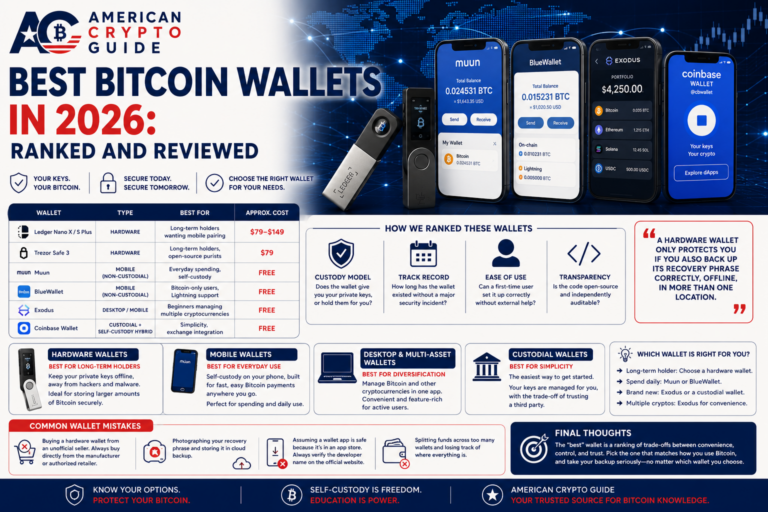
- Buy directly from the manufacturer or an authorized retailer — never a third-party marketplace listing, where devices have occasionally been tampered with before sale.
- Generate your keys on the device itself, never by importing a private key that was ever generated or displayed on an internet-connected device.
- Write down your recovery phrase by hand, on paper or a metal backup, and store it somewhere offline and separate from the device itself.
- Verify the device’s authenticity using the manufacturer’s official verification process before transferring any funds to it.
- Send a small test transaction first, before moving your full holdings, to confirm everything works as expected.
Full setup documentation for the most common devices is available directly from manufacturers — for example, at https://trezor.io and https://www.ledger.com.
What cold storage doesn’t protect against
Cold storage is excellent at solving one specific problem — remote, internet-based theft — but it doesn’t solve every risk:
- Physical theft or loss of the device itself, if the recovery phrase isn’t backed up separately and securely.
- A poorly stored recovery phrase, which defeats the entire purpose of offline storage if it’s photographed, typed into a note app, or stored in the cloud.
- User error during setup, like generating keys on a compromised computer before transferring them to the cold device.
- Physical coercion, an unfortunate but real risk for holders known to have significant crypto holdings.
Who actually needs a cold wallet
- Yes, clearly: anyone holding an amount they’d be seriously upset to lose, planning to hold for months or years rather than trade actively.
- Probably not yet: someone testing crypto for the first time with a small amount, where the convenience of a hot wallet or exchange outweighs the security benefit at that scale.
- A middle ground: many experienced holders use a hot wallet for smaller, active amounts and a cold wallet for the bulk of their long-term holdings — treating them as two different tools for two different jobs, rather than picking one exclusively.
Common cold wallet mistakes
- Storing the recovery phrase digitally — in a password manager, cloud note, or photo — which reintroduces the exact online exposure cold storage is meant to eliminate.
- Buying a used or discounted device from an unofficial seller, risking a pre-tampered unit.
- Never testing the recovery process before it’s actually needed, only to discover a backup error during an emergency.
- Keeping the only backup copy in the same physical location as the device itself, exposing both to the same fire, flood, or theft risk.
Final thoughts
A cold wallet’s entire value comes from one simple fact: private keys that never touch the internet can’t be stolen remotely. Understanding how that offline signing process works — not just that it exists — is what makes the security benefit click, and what makes the extra setup effort worth it for anyone holding crypto they actually care about keeping.